

Blog
How to Identify Original Basmati Rice Before You Buy

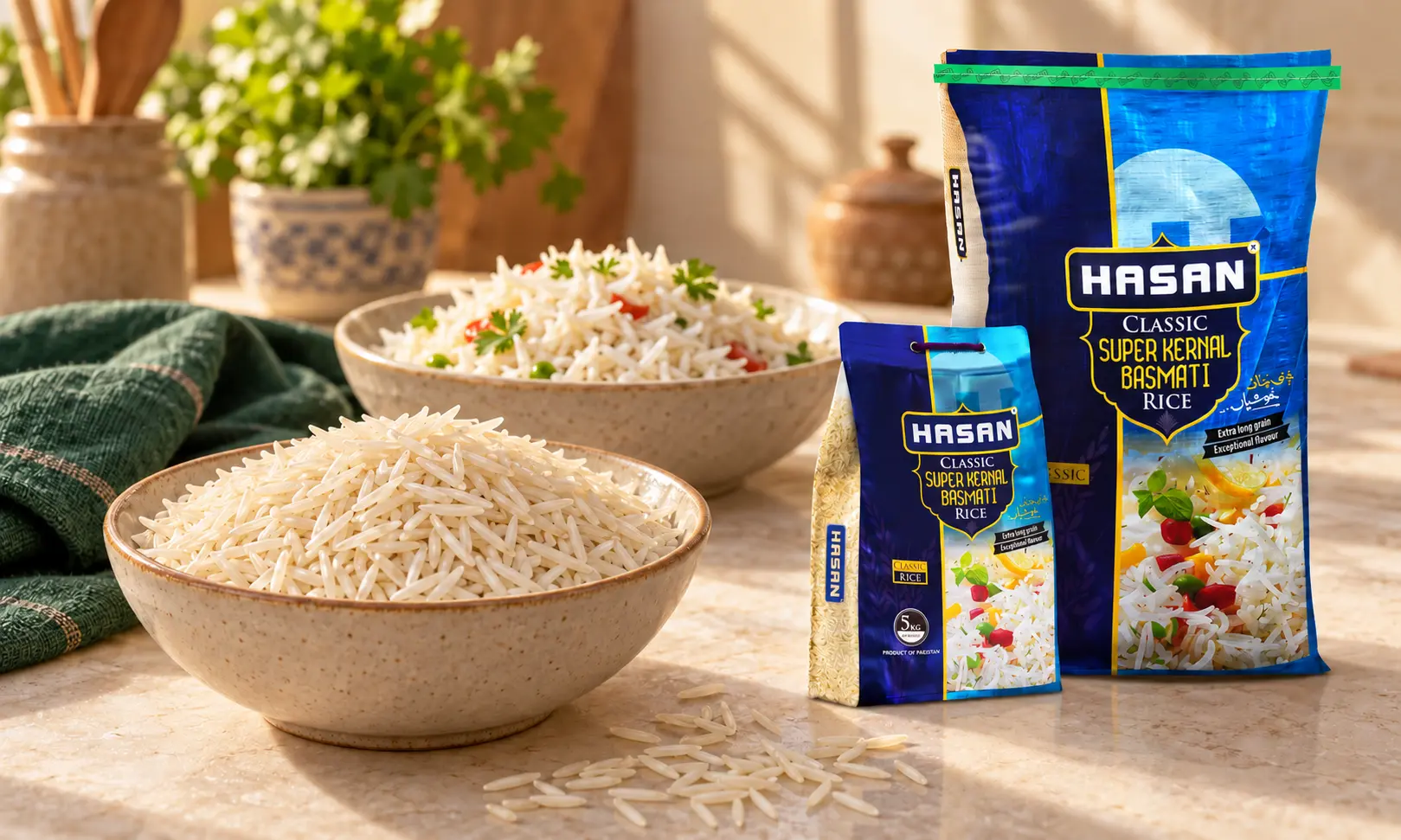
Basmati rice is more than just food. Its aroma, long grains, and fluffy texture make dishes like biryani and pulao special. In Pakistan, it sits at the heart of every family table and festive dawat. But not every pack labelled “Basmati” is genuine. Some products may contain cheaper rice or lack proper ageing. Knowing what to check can help you identify original Basmati rice by its appearance, aroma, grain length, texture, and cooking quality.
You can identify original basmati rice with a few simple home tests. Check the grain. Real basmati has extra-long, slender grains with a high length-to-width ratio. Smell it. Genuine basmati has a natural, nutty aroma, not a sharp perfume smell. True basmati elongates to nearly twice its length and stays fluffy and separate, not sticky. Also check the label for old rice, and buy from a trusted brand. These steps separate authentic basmati rice from scented imitations.
What Makes Basmati Rice Unique?
Basmati rice is known for its extra-long, slender grains, natural aroma, and distinctive cooking performance. During cooking, the grains can elongate significantly while remaining soft, fluffy, and separate. Pakistan is well known for producing Basmati rice, including popular varieties such as Super Kernel Basmati and 1121 Basmati. Hasan Rice specializes in naturally aromatic, long-grain, and carefully aged rice, with a focus on consistent grain quality and cooking performance.
Basmati rice has several key characteristics that set it apart:
- Long, Slender Grains: Basmati has a distinctive long and slender grain shape, with 1121 known for its extra-long grain and high cooked elongation.
- Natural Aroma & Texture: It has the characteristic fragrance associated with Basmati and can produce a soft, light, and separate texture when properly cooked.
- Strong Cooking Performance: The grains expand mainly in length during cooking while maintaining their structure and staying separate rather than becoming excessively sticky.
The Grain Shape and Length Test
Start with the grain. This is the first and easiest check.
Real basmati grains are thin and long. They have a high length-to-width ratio. Uncooked, they measure around 7.9 mm to 8.4 mm. Pakistani Super Kernel Basmati is prized for exactly this long, slim grain. The grains should look uniform, with equal size and thickness. If you see a mix of short and long grains, the rice is blended.
Authentic basmati will expand in length, not width. The grains stay separate, tender, and firm. If the rice turns sticky, clumpy, or barely grows, it is likely a lower-grade blend.
The Aroma Test
Rub a few uncooked grains between your palms. Bring them close to your nose. Genuine basmati has a subtle, earthy, nutty smell even in raw form. This shows proper ageing.
Be careful with strong smells. If the rice smells like flowery perfume before it even touches water, it was likely treated. Overly sweet or chemical smells mean artificial fragrance. When you cook real basmati, the aroma fills the kitchen. But it never feels sharp or overpowering.
The Water and Soak Test
Take a clear glass and add a handful of rice. Watch closely. Pure basmati usually sinks slowly. This is due to its density and structure. If many grains float at once, they may be lightweight, inferior varieties.
Check the water too. It should stay clear. If it turns cloudy or leaks colour, that is a red flag for artificial colouring. Also look at the grains through the glass. They should be long, slender, and uniform. Broken or uneven grains point to lower-grade mixing.
For soaking, aged basmati needs about 15 minutes before cooking. Golden Sella and White Sella grains need at least 2 hours. After cooking, good basmati nearly doubles in length while staying slender.
Colour, Ageing, and the Label
Look at the colour. High-quality aged basmati has a natural, off-white or slightly creamy shade. Avoid rice that looks overly shiny or bleached white. That means it was over-polished and processed too much.
Ageing matters a lot. Old basmati rice cooks lighter and fluffier and tastes better. The best rice is aged 12 to 24 months. It needs time. Ageing lowers moisture and stops the grains from sticking. So check the label for the words “Old Basmati Rice.”
A Quick Comparison: Real vs Fake Basmati
Here is a simple table to help you decide.
| Feature | Real Basmati Rice | Fake / Blended Rice |
| Grain | Extra-long, slender, uniform | Short, stubby, uneven |
| Aroma | Natural, nutty, subtle | Sharp perfume or chemical |
| After cooking | Doubles in length, fluffy, separate | Little elongation, sticky, clumpy |
| Colour | Natural off-white, creamy | Overly shiny or bleached white |
| Water test | Sinks slowly, water stays clear | Floats fast, water turns cloudy |
Choosing a Trusted Brand
Home tests help a lot. But the brand matters too. Good brands follow high milling standards. They keep grain size consistent. They age the rice properly. And they offer traceability.
Before buying in bulk, test a tiny pack first. Cook it. Check the taste, aroma, and texture. Make sure the rice is clean and free from stones or foreign grains. This simple step saves you from a bad bulk order. Purity should never be left to guesswork. In Pakistan, always look for trusted Super Kernel or 1121 basmati from a name you know.
Buy Original Basmati Rice from Hasan Rice
Hasan Rice gives you authentic, aged basmati rice you can trust. Every grain is long, slender, and naturally aromatic. It is perfect for biryani, pulao, fried rice, and family meals. We serve homes across Lahore and supply restaurants, hotels, caterers, and bulk buyers too. We also export to international markets. Order your pack today. Taste the difference real basmati makes.
Conclusion
Spotting original basmati rice is easy once you know the signs. Check the long, slender grains. Smell the natural, nutty aroma. When cooked, it doubles in length and stays fluffy. Look for a natural off-white colour and an “old rice” label. Then buy from a brand you trust, like a quality Pakistani Super Kernel or 1121. Follow these steps, and every pot of rice will bring the true taste of basmati to your table, a meal your family will love every single time.
FAQs
How can I identify real basmati rice quickly at home?
Check the grain length, smell the aroma, and watch the elongation after cooking. Pure grains are long, fragrant, and separate easily.
Does ageing really affect basmati rice quality?
Yes. Proper ageing lowers moisture. It improves aroma, elongation, and cooking texture a lot.
Is floating rice always fake?
Not always. But too many floating grains can mean the rice is mixed with lighter varieties.
Why does my rice not elongate after cooking?
Poor ageing or blended rice often reduces the natural elongation. Real basmati nearly doubles in length.
Will washing remove the natural aroma?
No. The natural aroma sits deep inside the grain. Washing only removes sprayed, artificial smell.
What is the best basmati rice in Pakistan for biryani?
A long-grain aged basmati like Super Kernel or 1121 is ideal. Both have excellent grain length and a strong natural aroma.