

Blog
Basmati vs Non-Basmati Rice – Which One Should You Buy?

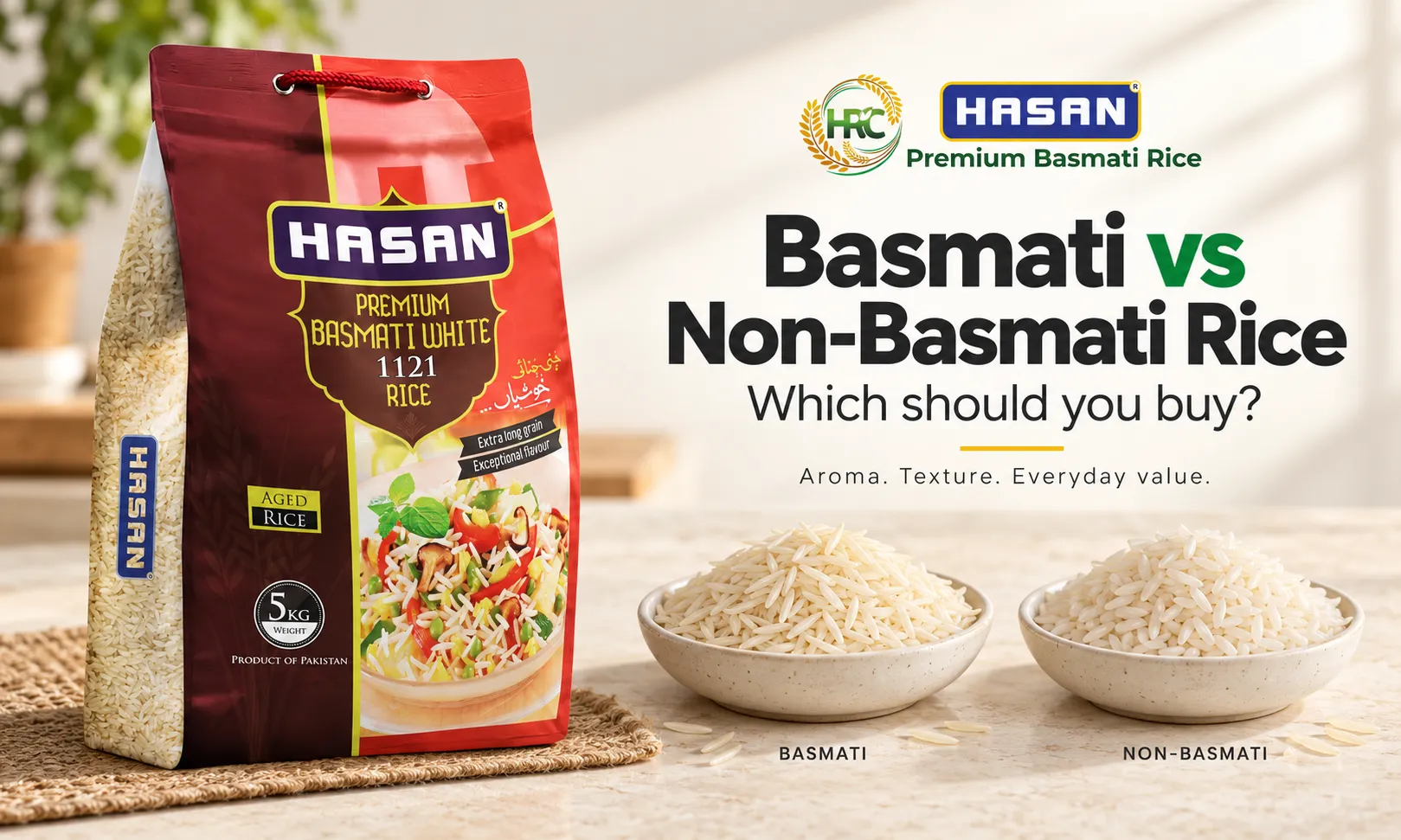
Rice plays an important role in Pakistani meals, from aromatic biryani and pulao to everyday dishes. When buying rice in Lahore and across Pakistan, many people compare basmati and non-basmati rice to find the best option for their cooking needs, taste preferences, and budget.
Basmati rice is an excellent choice if you prefer naturally aromatic rice with long, slender grains and a fluffy texture when cooked properly. Non-basmati rice can also suit many meals, but the best option depends on your cooking needs, budget, and preferred results.
Understanding the differences will help you choose the right rice for biryani, pulao, family meals, and other dishes.
What Is Basmati Rice?
Basmati is a group of aromatic rice varieties known for their long, slender grains, distinctive fragrance, and characteristic texture. Pakistan is well known for producing basmati rice, particularly in Punjab.
One popular option is Premium Basmati White 1121 Rice, which is suitable for buyers looking for long-grain rice for traditional dishes.
Key Features of Basmati Rice
- Aroma: Basmati has a distinctive fragrance that becomes noticeable during cooking.
- Grain length: Many varieties have long, slender grains that elongate further when cooked.
- Texture: Properly cooked basmati generally produces fluffy, separate grains.
- Taste: It has a characteristic flavour that complements spices and other ingredients.
- Common uses: Biryani, pulao, steamed rice, and special family meals.
Basmati is available in different forms, including raw white, steam, and sella rice. These processing methods affect the grain’s colour, firmness, and cooking behaviour. Choosing the right type can help you achieve your preferred results.
What Is Non-Basmati Rice?
Non-basmati rice refers to rice varieties that do not belong to the basmati group. These varieties differ in grain size, aroma, texture, and cooking characteristics.
Some non-basmati varieties are shorter or rounder, while others have long grains. Their qualities depend on the variety and how the rice is processed.
Key Features of Non-Basmati Rice
- Grain shape: It can have short, medium, or long grains.
- Aroma: Many varieties have a milder aroma than basmati.
- Texture: Depending on the variety, cooked rice may be soft, firm, sticky, or fluffy.
- Uses: Different varieties suit everyday meals, rice dishes, and commercial food preparation.
- Price: Some non-basmati options may cost less than comparable premium basmati products.
Non-basmati rice is not necessarily poor quality. It serves different cooking needs, and some varieties may be more suitable for particular dishes. However, if you value traditional basmati aroma and long, separate grains, basmati is worth considering.
Basmati vs Non-Basmati Rice: Key Differences
The main difference is that basmati is known for its distinctive aroma and grain characteristics, while non-basmati covers a wider range of rice varieties.
The following table explains how they generally compare.
| Feature | Basmati Rice | Non-Basmati Rice |
| Aroma | Distinctive fragrance | Varies by variety |
| Grain shape | Usually long and slender | Short, medium, or long |
| Cooked texture | Often fluffy with separate grains | May be soft, firm, sticky, or fluffy |
| Grain elongation | Many varieties elongate noticeably | Depends on the variety |
| Common uses | Biryani, pulao, special meals | Everyday meals and various rice dishes |
| Price | Premium varieties may cost more | Options available at different price levels |
| Best suited for | Buyers who value aroma and long grains | Buyers seeking specific textures or budget options |
These are general differences rather than fixed rules. Rice quality, processing, storage, soaking, and cooking methods also affect the final result.
Nutritional Differences Between Basmati and Non-Basmati Rice
Basmati Rice
Basmati rice is known for its long grains and aroma. Its glycaemic index (GI) and nutritional profile vary by variety and processing method. Check nutritional information and serving recommendations when comparing options.
Non-Basmati Rice
Non-basmati rice varieties have different nutritional characteristics. Grain type, processing, and preparation can affect fibre, carbohydrate, and calorie content. Compare product labels to find an option that suits your dietary preferences and cooking needs.
Which Rice Is Better for Biryani and Pulao?
For traditional Pakistani biryani and pulao, basmati rice is often the preferred choice because of its characteristic aroma, slender grains, and attractive appearance after cooking.
However, the type of basmati you choose also matters.
Basmati Rice for Biryani
Biryani combines rice with spices, meat, vegetables, and other ingredients. Aromatic basmati complements these flavours while helping create the long-grain appearance associated with the dish.
Steam basmati can be a practical option when you want grains that hold their shape during cooking. Sella basmati is another option for those who prefer particularly firm grains, especially when preparing large batches.
Basmati Rice for Pulao
Pulao often relies on the aroma of rice, stock, whole spices, and other ingredients. Basmati works well for this purpose because its fragrance complements the seasoning without overwhelming the dish.
What About Everyday Meals?
Basmati is also suitable for everyday family meals. If you enjoy its aroma and texture, you can use it for steamed rice and meals served with lentils, vegetables, curries, or meat.
Non-basmati rice may be a practical alternative when a particular dish calls for a different texture or when price is the main consideration.
How to Choose the Right Rice in Pakistan
Before buying rice in Lahore or elsewhere in Pakistan, consider these factors.
1. Consider the Dish
For traditional biryani, pulao, and special occasions, aromatic basmati is a strong option. For other dishes, choose a variety based on the texture you want.
2. Check the Processing Type
Raw white, steam, and sella basmati cook differently. Raw white basmati is often chosen for its characteristic aroma, while steam and sella types can offer firmer grains.
3. Compare Quality and Price
Do not judge rice by price alone. Check the variety, grain condition, packaging, and product information. Compare prices for the same variety and pack size to make a fair decision.
4. Choose the Right Pack Size
A smaller pack may suit a household that cooks rice occasionally. Larger packs can be useful for families that consume rice regularly, as well as restaurants and catering businesses. Always consider your storage space and expected use.
5. Follow the Cooking Instructions
Even high-quality basmati can become sticky or break if it is overcooked. Follow the recommended soaking and cooking instructions for the specific product you buy.
Explore Premium Basmati Rice from Hasan Rice in Pakistan
Hasan Rice offers basmati rice options for people who enjoy aromatic, long-grain rice for biryani, pulao, and family meals.
Hasan Premium Basmati White 1121 Rice is a choice for those who prefer premium white basmati, while Hasan Steam 1121 Basmati Rice may suit those who prefer firmer grains.
With experience in the rice industry since 1972, Hasan Rice Corporation supplies rice to local and international markets.
Explore the available varieties, compare pack sizes, and choose the basmati rice that suits your cooking needs. Visit the Hasan Rice website to browse its products and order online.
Conclusion
When comparing basmati vs non-basmati rice, consider your cooking needs, budget, and preferred texture. Basmati is a great choice for its distinctive aroma, long grains, and fluffy texture in biryani, pulao, and special meals.
Non-basmati rice suits many dishes, but may have a milder aroma. Before buying, compare the variety, processing type, quality, and price. For buyers in Lahore and across Pakistan, premium basmati is worth considering for traditional rice dishes.
Frequently Asked Questions
What is the main difference between basmati and non-basmati rice?
Basmati is an aromatic rice group known for its long, slender grains. Non-basmati includes other rice varieties with different grain shapes, aromas, and textures.
Is basmati rice better for biryani?
Basmati is often preferred for biryani because of its distinctive aroma and long grains. The final result also depends on the variety and cooking method.
Is non-basmati rice cheaper than basmati?
Some non-basmati varieties cost less than premium basmati, but prices depend on quality, variety, processing, and pack size.
Which basmati rice is suitable for pulao?
Raw white and steam basmati can both work well for pulao. Your choice depends on whether you prefer a softer texture or firmer, separate grains.
Where can I buy basmati rice in Lahore?
You can explore the available basmati rice varieties and pack sizes on the Hasan Rice website. Compare the product details to choose rice that suits your cooking needs.