

Blog
Sella vs Basmati Rice – What’s the Difference?

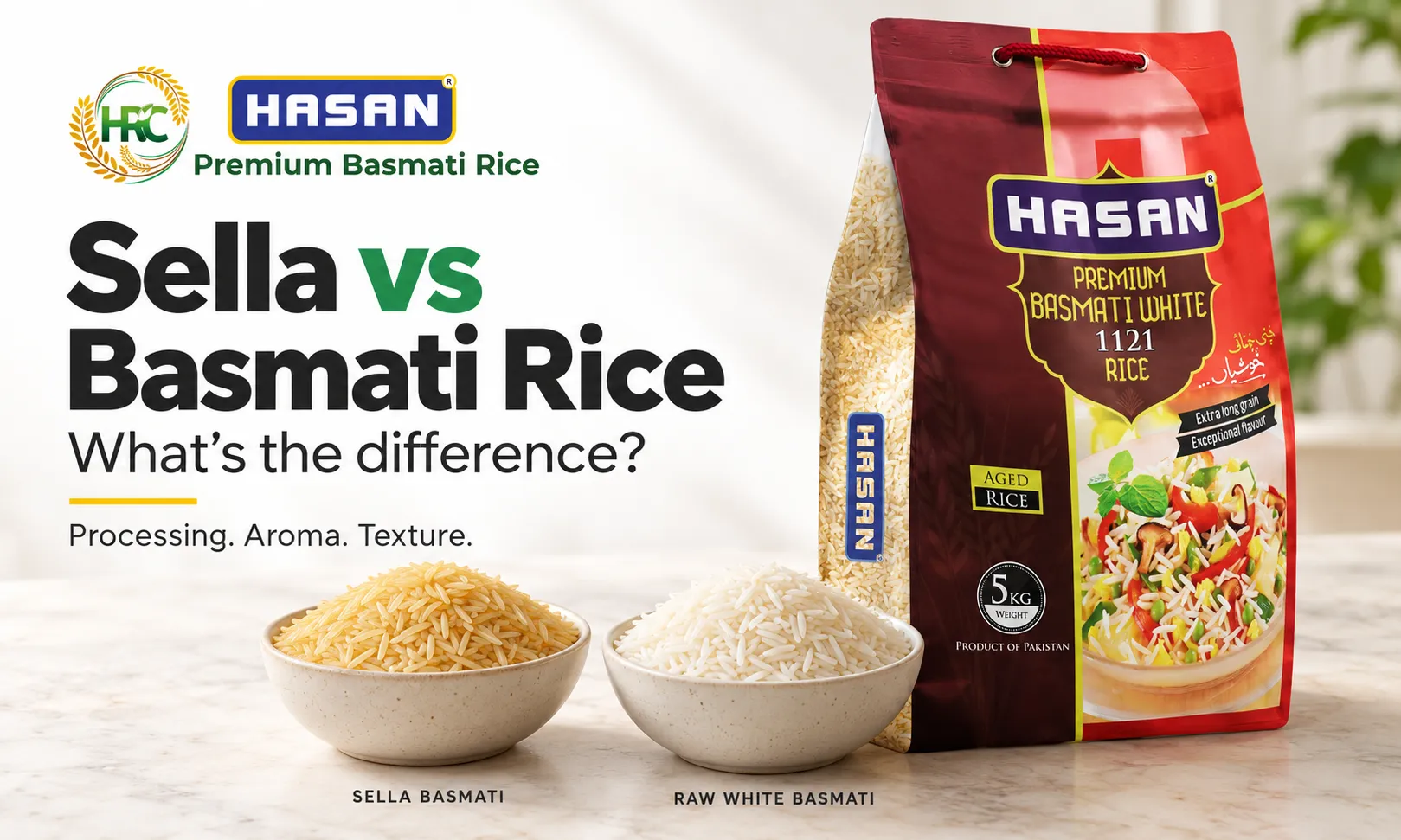
Choosing the right rice can make a big difference to your meal. Some people prefer soft, fragrant rice, while others want firm grains that stay separate during cooking. This is why many buyers compare sella vs basmati rice when shopping for biryani, pulao, and other rice dishes in Lahore and across Pakistan.
The main difference is that basmati is a type of rice, while sella describes a processing method called parboiling. Basmati rice can be sold as raw white rice, steam rice, or sella rice. Each type can have different cooking characteristics, depending on its processing and quality.
What Is Basmati Rice?
Basmati rice is an aromatic rice type known for its long, slender grains and distinctive fragrance. In Pakistan, and especially in Lahore homes, varieties such as Premium Basmati White 1121 Rice are popular for preparing biryani, pulao, and other traditional dishes. Basmati rice is available in different forms depending on how it is processed. Raw white basmati is milled without parboiling, steam basmati is treated with steam before milling, and sella basmati is parboiled before milling..
Key features of basmati rice:
- Grain shape: Known for its long, slender grains, particularly in varieties such as 1121.
- Aroma: Has a characteristic fragrance that makes it popular for traditional rice dishes.
- Texture: Usually cooks into separate, fluffy grains when prepared properly.
- Types: Available as raw white, steam, and sella basmati rice.
- Common uses: Suitable for biryani, pulao, and everyday meals.
What Is Sella Rice?
Sella rice is a type of parboiled rice made by soaking and heating rice paddy with steam before drying and milling it. This process changes the grain’s starch structure, making it firmer and less likely to break during cooking. In Pakistan, sella rice is popular for biryani, catering, and large meals because it can hold its shape well when cooked properly. However, sella rice is not always basmati, as it can be made from different rice varieties.
Key features of sella rice:
- Processing: Rice paddy is soaked, heated, dried, and milled.
- Colour: Grains may appear creamy, pale golden, or deep golden, depending on processing.
- Texture: Cooked grains are generally firm and tend to hold their shape.
- Common uses: Often used for biryani, restaurant meals, and large gatherings.
- Varieties: Sella processing can be applied to basmati and other types of rice.
Sella Basmati Rice vs Sella: Key Differences
The comparison becomes clearer when you understand that sella and basmati are not mutually exclusive categories. The following table compares typical sella basmati with raw white basmati.
| Feature | Sella Basmati Rice | Raw White Basmati Rice |
| Processing | Parboiled before milling | Milled without parboiling |
| Uncooked colour | Creamy, pale golden, or golden | White or off-white |
| Aroma | Can be milder after processing | Typically more noticeable |
| Grain texture | Generally firmer | Generally softer |
| Cooking behaviour | Often holds its shape well | Can become fluffy and separate with proper cooking |
| Common uses | Biryani, catering, large meals | Biryani, pulao, and everyday meals |
| Cooking time | May require longer cooking | Often cooks more quickly |
What About Golden Sella and Creamy Sella?
Golden sella usually has a deeper golden colour, while creamy sella has a lighter appearance. The difference is related to processing conditions.
Both can be made from basmati rice. Colour alone does not establish the quality of the rice, so buyers should also consider grain condition, cleanliness, aroma, and cooking performance.
Which Rice Is Better for Biryani?
Both sella and raw white basmati can work well for biryani. The better choice depends on your preferred texture and cooking method.
Sella basmati is a useful option when you want firm grains that are less likely to break during cooking. This can be particularly helpful for wedding biryani, restaurant kitchens, and large gatherings where the rice must retain its shape.
White basmati is a good option if you prefer its characteristic aroma and a softer, fluffy texture. It also works well for traditional homemade biryani when the rice is soaked and cooked carefully.
How to Choose the Right Rice
Before buying rice in Lahore or anywhere in Pakistan, consider these practical points:
- For Firm Biryani Grains: Consider sella basmati, especially for large batches.
- For Fragrance: Look for good-quality basmati that suits your preferred aroma.
- For Everyday Meals: Choose a variety that fits your budget and usual cooking style.
- For Restaurants and Catering: Consider consistency, grain breakage, cooking performance, and pack size.
- For Online Purchases: Check the variety, processing type, packaging, and product details before ordering.
Remember that even good rice can become sticky or break if it is overcooked or handled incorrectly. Following the cooking instructions for your specific product is important.
Choose Quality Pakistani Basmati Rice from Hasan Rice
If you are looking for Quality Steam Basmati rice for family meals or special occasions, Hasan Rice Corporation offers options for different cooking needs. The company has been serving the rice industry since 1972 and supplies rice to customers in Pakistan and international markets.
Conclusion
The key difference in the sella vs basmati rice comparison is that basmati describes a rice type, while sella describes a processing method. Sella basmati is generally firmer and holds its shape well, while raw white basmati is valued for its characteristic aroma and soft, fluffy texture.
For biryani, either can be a good choice depending on your preferred results. Consider the processing method, grain quality, and cooking requirements before buying.
FAQs
Is sella rice the same as basmati rice?
No. Basmati is a rice variety, while sella refers to rice processed through parboiling. Hasan Rice offers different basmati options to suit different cooking needs.
Which Hasan Rice product is best for biryani?
Both raw white basmati and steam basmati can be suitable for biryani, depending on your preferred texture and cooking method. Explore Hasan Steam 1121 Basmati Rice for a long-grain option.
Why does sella rice have a yellow colour?
Sella rice can have a creamy or golden colour because of the parboiling process. The exact shade depends on the rice variety and processing method.
Does steam basmati rice take longer to cook?
Cooking time depends on the rice variety, soaking time, and preparation method. Follow the cooking instructions for your chosen product to achieve the desired texture.
Where can I buy basmati rice in Lahore?
You can explore Hasan Rice’s range of Pakistani rice products, including Premium Basmati White 1121 Rice and Hasan Steam 1121 Basmati Rice, through the official website.