

Blog
Types of Rice in Pakistan: 10 Popular Varieties

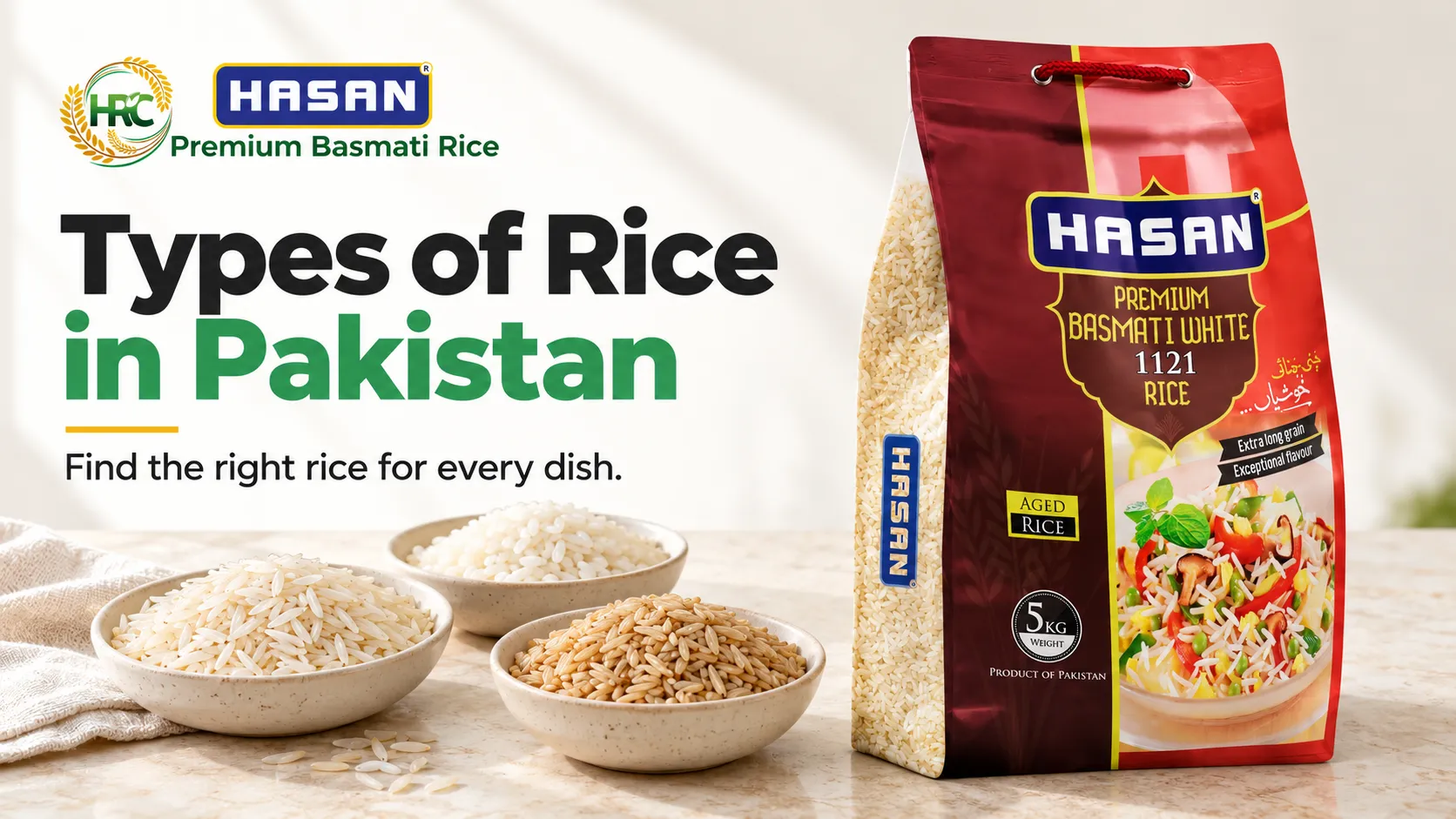
Most people buy the same rice every week without thinking twice. Then one day the biryani comes out sticky, the pulao lacks aroma, or the grain breaks in the pot. The problem is almost never the recipe. It is the rice variety.
Pakistan grows some of the finest rice in the world, but different varieties behave very differently in the kitchen, and buying the wrong one for the wrong dish is one of the most common mistakes home cooks and commercial buyers make.
Pakistan is among the top rice-exporting nations globally, and the reason is simple: the country produces an exceptionally wide range of rice varieties, from premium aromatic basmati to high-yield coarse grain, each suited to specific uses.
Once you understand what each variety offers, shopping for rice becomes far more straightforward.
Super Basmati Rice
Super basmati is one of Pakistan’s most prized aromatic rice varieties. Developed specifically for premium domestic and export markets, it has an extra long slender grain that elongates nearly double after cooking.
The natural aroma is strong, the texture is dry and separate, and the grain holds its shape well in rich spiced dishes. It is the go-to variety for high-end biryani, wedding-grade pulao, and fine dining preparations.
International buyers in the Middle East and Europe specifically request super basmati for its consistent aroma and grain definition. It commands a higher price than most varieties but delivers results that justify it for special occasions.
1121 Basmati Rice
1121 basmati is currently the most commercially dominant basmati variety in Pakistan and one of the most exported rice types in the world. The grain length before cooking typically falls between 7.5mm and 8.5mm and nearly doubles after cooking, giving it a dramatic elongation that no other variety consistently matches.
It comes in two common forms. White 1121 is milled without steam processing, giving it a lighter colour and a more delicate aroma. Steam 1121 goes through partial pre-cooking inside the husk, which firms up the grain, gives it a slightly golden appearance, and makes it perform better in heavy, rich dishes like mandi and kabsa. Both are widely used across Pakistani restaurant kitchens and exported to Saudi Arabia, UAE, and the UK in large volumes.
Explore both varieties at Hasan Rice Corporation’s product range.
Super Kernel Basmati Rice
Super kernel basmati is a traditional Pakistani aromatic variety that predates the 1121 in commercial prominence but remains highly popular for everyday premium cooking.
The grain averages around 7.0mm before cooking and has a soft, fluffy texture after cooking with a naturally nutty scent. It is slightly shorter and softer than 1121, which makes it ideal for everyday biryani, steamed rice with curries, and kheer.
Home cooks who find 1121 too firm for regular meals often prefer super kernel for its more approachable texture. It sits at a lower price point than 1121 while still delivering the aroma and separation that define genuine basmati.
1509 Basmati Rice
1509 basmati is a newer variety that has gained significant traction in export markets over the past decade. The grain is long, the aroma is mild compared to 1121 and super basmati, and the cooking time is shorter than most traditional basmati varieties due to its lower aging requirement.
It is popular among buyers who want the look of a premium long grain rice at a slightly lower cost. The yield per acre is higher than 1121, which keeps the price more accessible. In the kitchen, it works well for pulao and everyday rice preparations but does not match 1121 for biryani where aroma and elongation are the priority.
Basmati 385 and PK 386
These are older, established basmati varieties that served as the backbone of Pakistan’s aromatic rice exports for decades before 1121 became dominant. Basmati 385 has a medium-long grain, good aroma, and consistent cooking performance. PK 386 is similar in profile, with slightly shorter grain length and a mild scent.
Both varieties are still grown in Punjab and remain popular in domestic markets where buyers want genuine basmati character at a lower price than 1121. They are less prominent in international export markets today but hold steady demand in local trade.
IRRI-6 and IRRI-9 (Non-Basmati Long Grain)
IRRI varieties are non-basmati long grain rice types developed through the International Rice Research Institute. IRRI-6 and IRRI-9 are the most widely cultivated coarse rice varieties in Pakistan, grown primarily in Sindh and parts of Punjab. These varieties have a medium-long grain, neutral scent, and higher yield per acre compared to basmati.
They are not aromatic, but they cook well for everyday daal chawal, canteen cooking, and large-scale food preparation where volume and cost matter more than aroma. Pakistan exports large quantities of IRRI-6 to African markets where price drives purchasing decisions.
KS-282 (Sella Rice)
KS-282 is a parboiled or Sella rice variety processed by partially boiling the paddy before milling. The process firms up the grain, gives it a yellowish tint, and significantly extends its shelf life. It is popular in Middle Eastern markets where Sella rice is used extensively for kabsa, mandi, and large communal rice dishes.
The grain is long, holds up under extended cooking times, and resists becoming mushy even in heavy, fatty broths. It is widely exported from Pakistan and serves a different market segment from white basmati, catering to buyers who prioritise cooking durability over delicate aroma.
Brown Rice
Brown rice is whole grain rice that retains its outer bran layer after milling, unlike white rice which is fully milled. It is available in both basmati and non-basmati varieties.
The bran layer gives it a higher fibre content, more nutrients, and a lower glycemic index than white rice, making it a preferred choice for health-conscious buyers and people managing blood sugar.
The cooking time is longer and the texture is chewier than white rice. In Pakistan, brown rice consumption is growing among urban buyers who prioritise nutrition, though it remains a small fraction of overall rice consumption compared to white basmati and coarse varieties.
How to Choose the Right Rice Variety
The variety you need depends entirely on what you are making and how much you are cooking. For premium biryani, mandi, or kabsa, 1121 white or steam basmati is the best choice. The elongation, aroma, and grain definition are unmatched at any price point.
For everyday home cooking where aroma matters but cost is also a factor, super kernel basmati hits the right balance. For high-volume commercial cooking where consistency and cost-per-kilogram are the priority, IRRI-6, IRRI-9, or long grain non-basmati varieties make more practical sense.
If you want an option that bridges everyday quality and affordability, our Awami Long Grain Rice is milled from 1121 paddy and offers better grain quality than standard coarse varieties at a price point suited for homes and commercial kitchens alike.
Frequently Asked Questions
What are the main types of rice grown in Pakistan?
Pakistan grows super basmati, 1121 basmati, super kernel basmati, 1509 basmati, Basmati 385, PK 386, IRRI-6, IRRI-9, KS-282, and brown rice among others. Basmati varieties dominate the premium and export segment while IRRI varieties cover the coarse grain and domestic volume market.
Which rice variety is best for biryani in Pakistan?
1121 basmati, either white or steam processed, is the most popular choice for biryani. The extra long grain, strong aroma, and high elongation after cooking give biryani the texture and look that defines a well-made dish. Super basmati is also an excellent choice for special occasions.
What is the difference between 1121 and 1509 basmati rice?
1121 has a longer grain, stronger aroma, and greater elongation after cooking. It requires more aging and commands a higher price. 1509 has a slightly shorter grain, milder scent, and shorter cooking time. It is more affordable and suits everyday cooking, but 1121 outperforms it for premium dishes.
What is IRRI rice and how is it different from basmati?
IRRI rice varieties like IRRI-6 and IRRI-9 are non-basmati coarse grain types developed for high yield and affordability. They lack the natural aroma, extra long grain, and elongation of basmati varieties. They work well for everyday cooking and bulk commercial use where cost is the priority.
Is brown rice available in Pakistan?
Yes. Brown rice is available in both basmati and non-basmati types. It retains its outer bran layer, has higher fibre content, and a lower glycemic index than white rice. It takes longer to cook and has a chewier texture, but it is growing in popularity among health-conscious buyers in Pakistani cities.
Which rice variety does Pakistan export the most?
Pakistan exports large volumes of 1121 basmati to the Middle East, Europe, and North America, where it commands premium prices. IRRI-6 is exported in large quantities to African markets. Super basmati and KS-282 Sella rice also form a significant part of Pakistan’s rice export portfolio.